
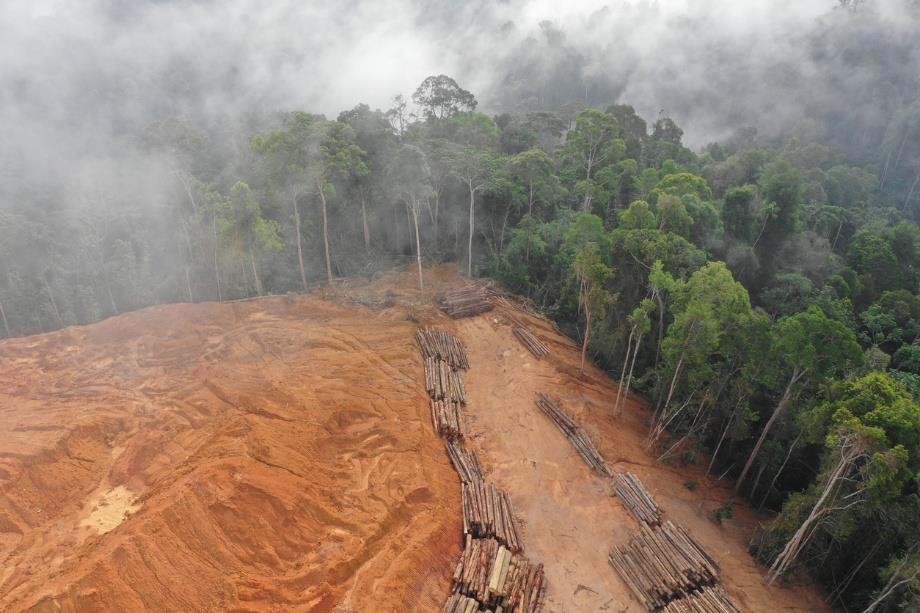
EUDR explained
The EU Deforestation Regulation (EUDR) is rapidly becoming one of the most significant trade compliance changes for businesses moving goods into, within or out of the European Union.
What is the EUDR and why does it matter?
The EUDR, Regulation (EU) 2023/1115, is an EU law that bans products linked to deforestation or forest degradation occurring after 31 December 2020 from being placed on or exported from the EU market. It requires companies to prove that covered products are deforestation-free and legally produced in the country of origin.
It replaces the older EU Timber Regulation and goes much further, covering seven key commodities and a wide range of derived products.
Commodities in scope
- Cattle
- Cocoa
- Coffee
- Oil palm (palm oil)
- Rubber
- Soy
- Wood and timber
Examples of derived products
- Beef and leather (from cattle)
- Chocolate and cocoa products
- Coffee products
- Tyres, rubber hoses and certain rubber articles
- Furniture, plywood, paper and many wood products
- Certain soy-based products and feeds
There is no minimum quantity or value threshold. If your product falls under the relevant CN/HS codes in Annex I of the Regulation, the EUDR can apply, regardless of shipment size.
How does the EUDR affect businesses?
The EUDR applies to any operator or trader who, in the course of business, places relevant products on the EU market for the first time (imports them), makes them available on the EU market (for example distributors, wholesalers and retailers), or exports relevant products from the EU. This includes EU-based companies importing or exporting covered goods, and non-EU companies, including UK businesses, exporting relevant products into the EU.
Operators and traders
- Operators first place relevant products on the EU market or export them from the EU. They carry the full due diligence obligations and must submit a Due Diligence Statement (DDS) for each shipment.
- Traders make products available further down the chain. Their duties are lighter, mainly collecting and passing on the DDS reference from their supplier, unless they have reason to suspect non-compliance.
Application dates
Following delays and simplifications, the current application dates are:
| Business size | Applies from |
|---|---|
| Large and medium-sized enterprises | 30 December 2026 |
| Micro and small enterprises | 30 June 2027 |
| Micro and small operators already covered by the EU Timber Regulation | 30 December 2026 |
The three conditions for compliance
- Deforestation-free: the product must not come from land that was deforested or degraded after 31 December 2020, including conversion of forest to agricultural use and significant loss of forest structure or functions.
- Produced in accordance with relevant local laws: production must comply with applicable national laws in the country of production, including those on land use, environmental protection, labour rights, human rights and the rights of indigenous peoples.
- Covered by a Due Diligence Statement: the company must carry out due diligence and submit a DDS through the EU's EUDR information system, linked to TRACES NT, before the goods are placed on the market or exported.
The due diligence process in practice
1. Information collection
Collect and retain detailed data on:
- Commodities and quantities in the consignment
- Suppliers and countries of production
- Geolocation coordinates (latitude and longitude polygons) of the plots where the commodities were grown or raised
- Evidence that the land was not deforested or degraded after 31 December 2020, and that production complied with relevant national laws
This is the most significant change compared with previous rules: traceability to plot level is now a core requirement, not an optional extra.
2. Risk assessment
Assess the risk that the product is non-compliant, taking into account the country or region of production, the prevalence of deforestation or forest degradation there, the presence of indigenous peoples and land-rights issues, and the complexity of the supply chain and reliability of the information provided. The EU is developing a country benchmarking system (low, standard and high risk) that will influence how much due diligence is required for different origins.
3. Risk mitigation
If the risk is not negligible, put in place adequate and proportionate measures before placing or exporting the product. These could include requesting more evidence from suppliers, third-party audits or verification, satellite monitoring of land use, or changing suppliers and sourcing from lower-risk areas.
All due diligence records must be kept for at least five years and made available to authorities on request.
The Due Diligence Statement and TRACES NT
Once due diligence is complete, operators submit a Due Diligence Statement in the EU's EUDR information system, which is integrated with TRACES NT. A separate DDS is required for each relevant consignment or batch placed on or exported from the EU market. It includes:
- Product and commodity details
- Supplier and country-of-origin information
- Geolocation data
- A declaration that the goods are deforestation-free and legally produced, with the outcome of the risk assessment and any mitigation steps
On submission, the system generates a unique DDS reference number, which must be shared with downstream customers and, where relevant, linked to customs declarations.
Penalties and enforcement
Each EU Member State designates competent authorities to enforce the EUDR, carry out checks and impose penalties. Sanctions must be effective, proportionate and dissuasive, and can include fines (often linked to turnover), confiscation of products and revenues, temporary or permanent exclusion from public procurement, and temporary or permanent bans on placing or exporting relevant products. Non-compliance carries financial and reputational risk, as well as the risk of goods being held or refused at the border.
How Customs Wise can help
We support UK and Irish businesses with:
- EUDR impact assessments: identifying which of your products and trade flows are in scope
- Supply chain mapping: helping you collect and structure the data you'll need for DDS filings
- Customs and trade advice: aligning EUDR requirements with your existing import and export processes
If you are unsure whether the EUDR applies to your business, or want to understand what you need to do before the 2026 and 2027 deadlines, get in touch with our team.